

What is archeology and what does it mean to have archaeological potential?
Archaeology is the study of how people lived in the past by examining the physical evidence they left behind, such as tools, pottery, structures and cultural landscapes.
Archaeological potential refers to the possibility that archaeological resources, such as artifacts or archaeological sites, may be present in an area. This does not mean that archaeological resources have already been found or are necessarily present. Archaeological resources can also sometimes be discovered in areas that were not previously identified as having archaeological potential.
We can assess the land, its location, and existing information to identify areas with archaeological potential. Key indicators include:
- Environmental Features: Proximity to water sources (e.g. the Grand River), distinctive topography, and fertile soils.
- Historical Records: Local history, previous discoveries, archival documents and old maps that provide insight into past land use.
- Disturbance Levels: If lands have been heavily altered by things like quarrying, major construction, or deep plowing they may have reduced potential because the soil integrity has been destroyed.
- Cultural Features: The presence of, or proximity to, known cultural heritage features, historic routes, or documented areas of past occupation.
As part of the Archaeological Management Plan, mapping will help identify areas of archaeological potential and guide when further investigation may be needed.
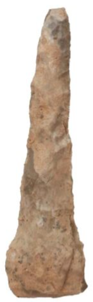
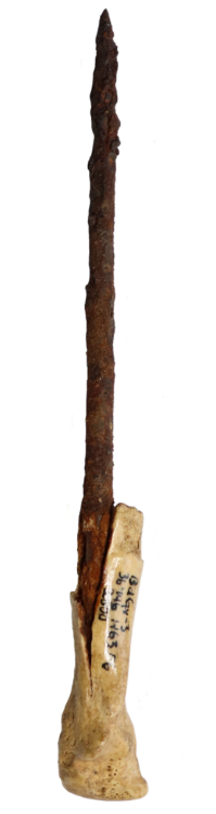
Examples of archeological artifacts:
Archaic Stone Drill (ARA Photo Library) |
Steel Awl with Bone Handle (ARA Photo Library) |
 |
 |
Thank you for your contribution!
Help us reach out to more people in the community
Share this with family and friends