Archaeology Management Plan

The County of Brant is preparing its first Archaeological Management Plan (AMP) to help identify, protect, and preserve important archaeological sites and cultural heritage resources, including places that reflect Indigenous history and culture. Developing this plan supports provincial requirements to consider and protect archaeological resources as part of land use planning and development.

The plan will help guide future growth and development by identifying areas where archaeological resources may be located. This information will help ensure these important pieces of our shared history are considered and protected while supporting a more efficient planning process.

What the plan will include
As part of this work, the AMP will:

  • Update mapping containing archaeological sites and areas of interest to better guide land-use planning and development decisions.
  • Include meaningful consultation and engagement with Indigenous communities. Creating stronger relationships and allowing us to better understand, identify, and protect sites that may hold cultural, historical, or spiritual significance.
  • Establish clear procedures for protecting and avoiding archaeological resources when development is proposed, including protocols for managing burial sites.
  • Ensure the County's approach aligns with provincial and federal legislation, policiesy, and requirements.
  • Provide clearer policies, guidelines, and frameworks to strengthen the County’s archaeological inventory and understanding of when assessments are needed.
  • Support public education and awareness by creating opportunities for community members to learn about the County's archaeological heritage and the importance of protecting it.
What to expect and when

Engagement for this project will take place in phases.

Learn more

Learn more about archaeology, archaeological assessments in Ontario, Archaeological Management Plans, understand why the County is undertaking this project, and find answers to common questions and concerns.

Explore the “Did You Know?” section to learn something new, discover how archaeology helps us understand the past, and find out how this work will help guide future decisions.


Stay informed

Subscribe for updates and be the first to receive the most current information about this project. Simply add your email to the Stay Informed box on this page and click ‘Subscribe’.

Did You Know? Discover Archaeology in Brant

There’s a lot to discover about Brant’s archaeological history!

  Explore the “Did You Know?” facts below to learn something new, discover how archaeology helps us understand the past, and find out how this work will help guide future decisions.

Thank you for sharing your story with us.

You need to be signed in to share your story.

All fields marked with an asterisk (*) are required.

  • The importance of protecting archeological resources
    by engage.brant, 13 days ago

    Archeological resources are irreplaceable; they cannot be duplicated or replaced if lost, damaged or destroyed. They are treasured because they allow us physical contact with our past and are sources of knowledge about our history. Every pottery fragment, stone tool, soil layer, and feature left behind helps us:

    • Understand the human experiences behind the objects;
    • Honour Indigenous histories, living cultures, and enduring connections to the land;
    • Learn more about Brant’s heritage and cultural landscapes; and,
    • Preserve tangible evidence of Indigenous presence spanning thousands of years.

    Even a small pottery fragment can offer valuable insight. For example, the fragment below has... Continue reading

    Archeological resources are irreplaceable; they cannot be duplicated or replaced if lost, damaged or destroyed. They are treasured because they allow us physical contact with our past and are sources of knowledge about our history. Every pottery fragment, stone tool, soil layer, and feature left behind helps us:

    • Understand the human experiences behind the objects;
    • Honour Indigenous histories, living cultures, and enduring connections to the land;
    • Learn more about Brant’s heritage and cultural landscapes; and,
    • Preserve tangible evidence of Indigenous presence spanning thousands of years.

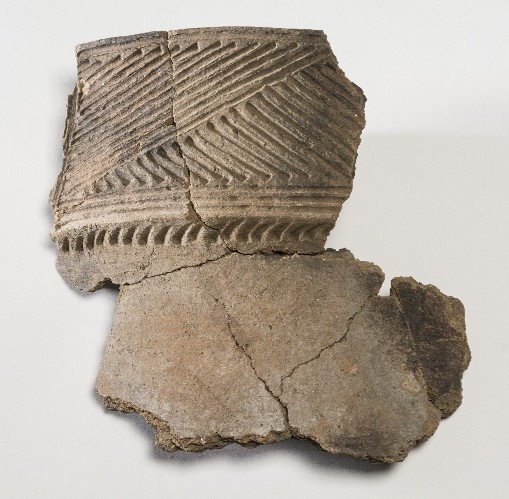
    Even a small pottery fragment can offer valuable insight. For example, the fragment below has distinctive geometric decoration that reveals how pottery was made and help us to better understand those who made it.

    Pottery fragment – Huron-Wendat of the St. Lawrence. Photo Credit - Musée Huron-Wendat

  • When is an archaeological assessment required?

    by engage.brant, 13 days ago

    When something new is built in Ontario that alters the landscape, an archaeological assessment may be required to find out if archaeological resources could be present. Whether it is housing, industries, community spaces, or more, we want to ensure resources are protected before the land is altered.

    Archeological assessments are laid out in four stages, each building on the findings of the previous one. Not every project requires all four stages. The results of each stage determine whether further assessment is needed.

    The four stages include:

    • Stage 1 Background Study and Property Inspection: Review the property’s history, geography, and past... Continue reading

    When something new is built in Ontario that alters the landscape, an archaeological assessment may be required to find out if archaeological resources could be present. Whether it is housing, industries, community spaces, or more, we want to ensure resources are protected before the land is altered.

    Archeological assessments are laid out in four stages, each building on the findings of the previous one. Not every project requires all four stages. The results of each stage determine whether further assessment is needed.

    The four stages include:

    • Stage 1 Background Study and Property Inspection: Review the property’s history, geography, and past land uses to determine whether archaeological resources may be present.
    • Stage 2 Property Assessment: In-field survey of site conditions and identification of archeological material.
    • Stage 3 Site-Specific Assessment: Examine a discovered archaeological site more closely to determine its size, age, significance and how development could affect it.
    • Stage 4 Mitigation of Development Impacts: Develop a plan to protect the archaeological site from development over the long term. If the site cannot be preserved, archaeologists carefully excavate and document it and recover artifacts before construction begins.

    Like a Stage 1 assessment, the Archaeological Management Plan will identify areas in the County where archaeological resources are more likely to be present based on background research and historical mapping. This information will help determine when a property may require further stages of assessment.

  • 500+ Archeological Assessments

    by engage.brant, 13 days ago

    Did you know that since 1975, more than 500 licensed archaeological assessments have been carried out in the County of Brant?

    The Ontario Heritage Act came into effect in 1975, creating protections for archaeological resources. Since then, more than 500 archaeological assessments have been completed in the County of Brant.

    Archaeological assessments are often triggered by development projects for which municipalities are the approval authority. According to the Ministry of Citizenship and Multiculturalism, 98% of archaeological assessments in Ontario are related to development or infrastructure. In 2025 alone, the Ministry received approximately 3,800 assessment reports from across the province.1

    ... Continue reading

    Did you know that since 1975, more than 500 licensed archaeological assessments have been carried out in the County of Brant?

    The Ontario Heritage Act came into effect in 1975, creating protections for archaeological resources. Since then, more than 500 archaeological assessments have been completed in the County of Brant.

    Archaeological assessments are often triggered by development projects for which municipalities are the approval authority. According to the Ministry of Citizenship and Multiculturalism, 98% of archaeological assessments in Ontario are related to development or infrastructure. In 2025 alone, the Ministry received approximately 3,800 assessment reports from across the province.1

    As communities grow, municipalities play an important role in identifying and protecting archaeological resources before land-use changes or development occur. As the County of Brant continues to grow, licensed archaeological assessments will help strengthen our understanding of its history and ensure that important resources are not unknowingly lost or disturbed.

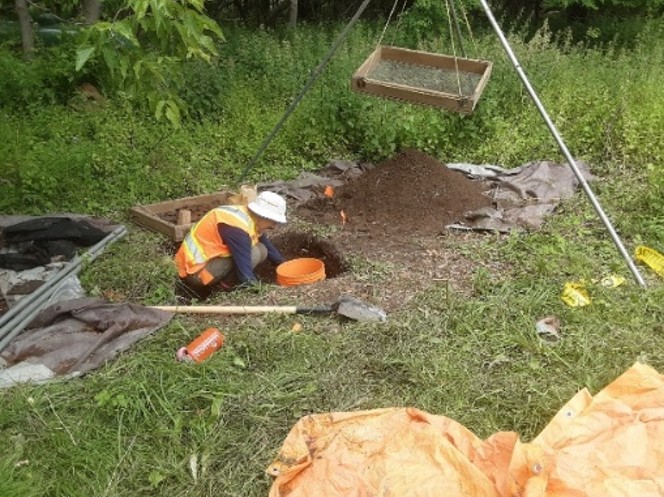
    Archeological Assessment Process – Photo Credit Archeological Research Associates Ltd.


    [1] https://news.ontario.ca/en/release/1008163/ontario-cutting-wait-times-for-archaeological-approvals-by-up-to-80-per-cent


  • 1,400+ Sites

    by engage.brant, 21 days ago

    Did you know more than 1,400 registered archaeological sites have been identified across Brant?

    These registered archaeological sites are officially documented locations that contain physical evidence of past human activity.

    These sites help tell the story of the people who have lived on these lands over thousands of years and highlight why archaeological resources need to be understood and protected.

    How do I know if my property is a registered archeological site?

    The Ontario Ministry of Citizenship and Multiculturalism maintains the official database of registered archaeological sites. Site locations are generally kept confidential to protect artifacts from theft or damage.

    ... Continue reading

    Did you know more than 1,400 registered archaeological sites have been identified across Brant?

    These registered archaeological sites are officially documented locations that contain physical evidence of past human activity.

    These sites help tell the story of the people who have lived on these lands over thousands of years and highlight why archaeological resources need to be understood and protected.

    How do I know if my property is a registered archeological site?

    The Ontario Ministry of Citizenship and Multiculturalism maintains the official database of registered archaeological sites. Site locations are generally kept confidential to protect artifacts from theft or damage.

    A licensed archaeologist can check whether your property contains a registered site. For most property owners, this information is only needed if an archaeological assessment is required.

    The Archaeological Management Plan will not show the locations of registered sites. Instead, it will include a map of areas where archaeological resources may be present. Even if your property does not contain a registered site, undiscovered archaeological artifacts may still be present.

  • What is archeology and what does it mean to have archaeological potential?
    by engage.brant, 21 days ago

    Archaeology is the study of how people lived in the past by examining the physical evidence they left behind, such as tools, pottery, structures and cultural landscapes.

    Archaeological potential refers to the possibility that archaeological resources, such as artifacts or archaeological sites, may be present in an area. This does not mean that archaeological resources have already been found or are necessarily present. Archaeological resources can also sometimes be discovered in areas that were not previously identified as having archaeological potential.

    We can assess the land, its location, and existing information to identify areas with archaeological potential. Key indicators include:

    • Environmental Features: Proximity to water sources (e.g. the Grand River), distinctive topography, and fertile soils.
    • Historical Records: Local history, previous discoveries, archival documents and old maps that provide insight into past land use.
    • Disturbance Levels: If lands have been heavily altered by things like quarrying, major construction, or deep plowing they may have reduced potential because the soil integrity has been destroyed.
    • Cultural Features: The presence of, or proximity to, known cultural heritage features, historic routes, or documented areas of past occupation.

    As part of the Archaeological Management Plan, mapping will help identify areas of archaeological potential and guide when further investigation may be needed.

    Examples of archeological artifacts:

    Archaic Stone Drill (ARA Photo Library)
    Steel Awl with Bone Handle (ARA Photo Library)


  • 10,000+ years

    by engage.brant, 29 days ago

    Did you know the lands that make up Brant have a rich Indigenous history and have been home to people for more than 10,000 years?

    Understanding this history is an important part of developing the County of Brant’s first Archaeological Management Plan (AMP).

    For thousands of years, Indigenous peoples have lived, travelled, traded, and cared for the lands we now call Brant. Before European contact:

    • 10,000-7,500 BC First Peoples in the Region: This period is the earliest known evidence of people living in southern Ontario dates. Small groups of Indigenous peoples moved throughout the region, relying on communal hunting and... Continue reading

    Did you know the lands that make up Brant have a rich Indigenous history and have been home to people for more than 10,000 years?

    Understanding this history is an important part of developing the County of Brant’s first Archaeological Management Plan (AMP).

    For thousands of years, Indigenous peoples have lived, travelled, traded, and cared for the lands we now call Brant. Before European contact:

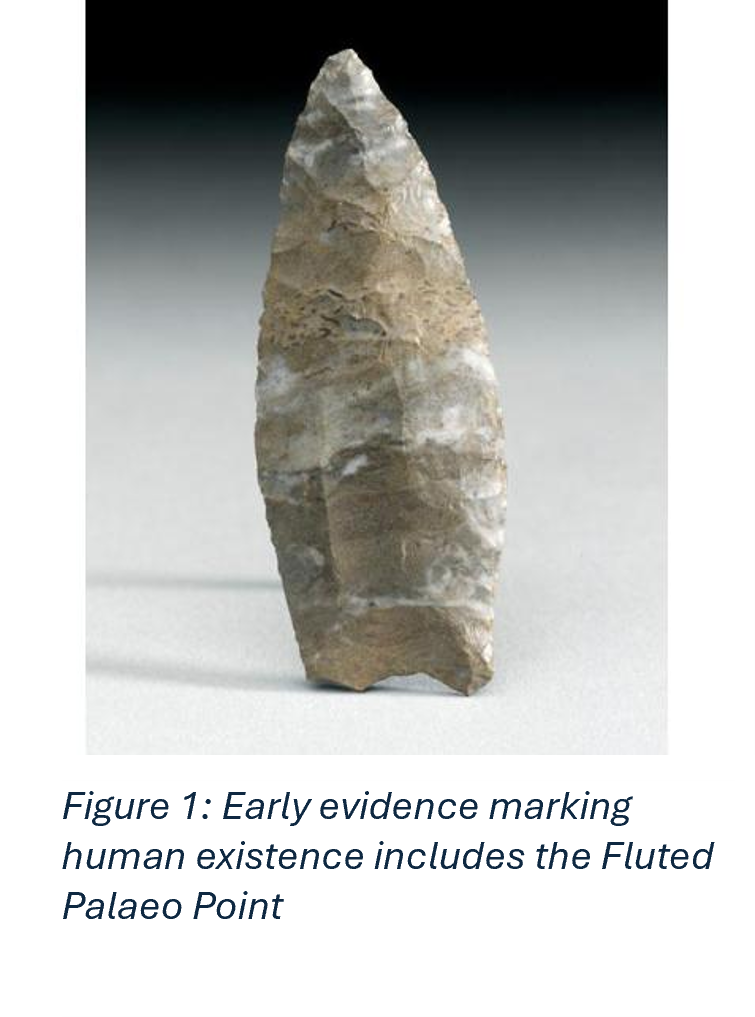
    • 10,000-7,500 BC First Peoples in the Region: This period is the earliest known evidence of people living in southern Ontario dates. Small groups of Indigenous peoples moved throughout the region, relying on communal hunting and gathering.
    • 7,500-6,000 BC Growing Communities: As the climate warmed and resource-rich forests grew, Indigenous peoples developed new technologies, including stone and copper tools. Populations grew, and trade networks connected communities.
    • 900 BC - 600 AD Innovation and Trade: This period saw the introduction of pottery, which improved food storage and preparation. Hunting, fishing, and gathering remained the main sources of food, while communities grew larger and trade became more widespread. During this period, the first evidence of corn cultivation appeared in southern Ontario, particularly along the Grand River.
    • 900 – 1,600 AD Farming and Village Life: Agriculture became central to daily life, with maize, beans, and squash, known as the "Three Sisters," supporting larger and more permanent villages. Major villages developed throughout southern Ontario, including the Lower Grand River Cluster near present-day Brant County. By the late 1500s, expanding fur trade networks brought increasing contact with Europeans.

    The story of the County of Brant did not begin 200 years ago. Indigenous peoples continue to live here, maintain deep relationships to the land, and contribute to the community today. As the County develops the Archaeological Management Plan, it is helping put its Land Acknowledgement into practice by recognizing and protecting long-standing Indigenous cultural heritage in the past, present and future.


    Image by the Royal Ontario Museum
Page last updated: 29 Oct 2026, 03:16 PM