

Municipal Drains
Municipal drains are another important part of the County's drainage system. They help move water away from properties, roads and agricultural lands.
Sediment, vegetation, erosion and blockages can change how water moves through a drain over time. Maintenance helps restore drainage and protect the surrounding land.
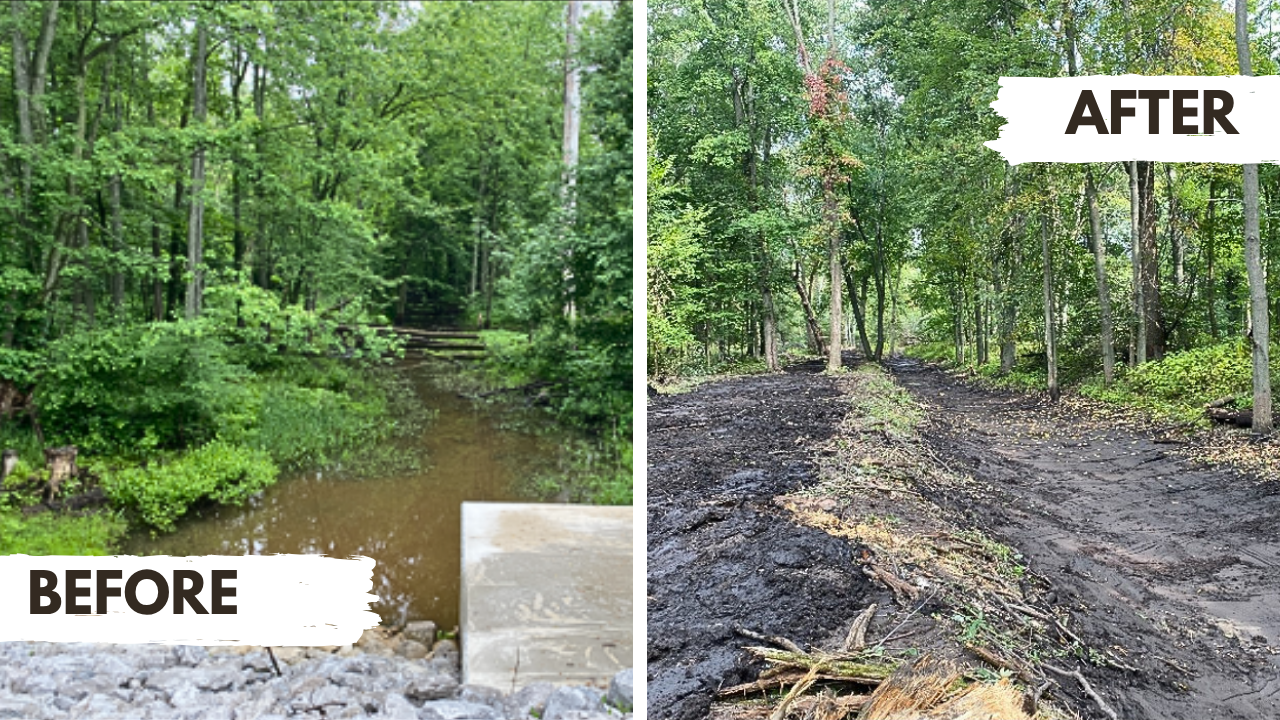
Shaver Municipal Drain, Burford
Restoring drainage while protecting a sensitive environment
What was happening?
Major blockages in the Shaver Municipal Drain were causing water to back up and flood areas throughout the drainage system. The drain was no longer operating as designed.
Fixing the problem required particular care.
The Shaver Municipal Drain passes through a sensitive wetland and empties into Whiteman's Creek, a protected cold-water creek that provides habitat for local trout populations.
What did we do?
The County worked with the Grand River Conservation Authority and the Federal Department of Fisheries and Oceans to obtain the strict required permits and develop measures to protect the surrounding environment and local Species at Risk.
Crews also needed a way to bring heavy equipment into the wetland without damaging the sensitive ground.
To do this, fallen logs were carefully placed to create a temporary wooden trackway, sometimes called a corduroy road. This distributed the weight of the equipment and helped protect the wetland soil underneath.
Crews were then able to access the drain and remove the blockages.
Why does it matter?
Once the blockages were removed, backed-up water began to recede and returned to normal levels. The surrounding lands could drain properly again.
The project restored the function of important drainage infrastructure while taking additional measures to protect the wetland, Whiteman's Creek and the species that depend on these environments.
See the work and results
Branch Creek Municipal Drain
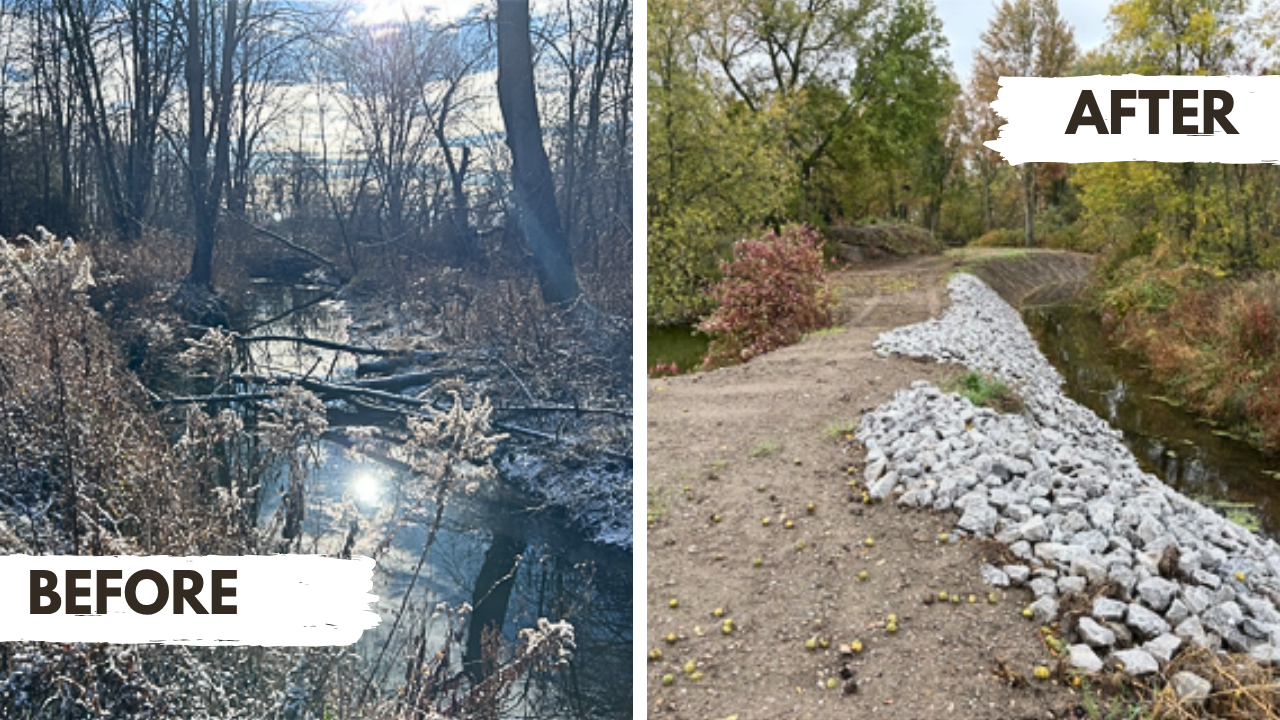
Restoring the drain's original design
What was happening?
Over time, sediment and debris had accumulated in the Branch Creek Municipal Drain in the southwest area of the County.
This buildup can change the shape and capacity of a drain and affect how efficiently it carries water.
What did we do?
Crews removed accumulated material and restored the drain to its original engineered design.
Why does it matter?
Restoring the channel improves the movement of rainwater during heavy storms and helps the drainage system operate as intended.
A properly maintained channel can also help manage erosion along the banks. This protects surrounding soil, agricultural land and nearby properties from damage caused by uncontrolled water flow.
See the difference?
Hamilton Lockhart Drain, near Burford
Clearing the way for water to flow
What was happening?
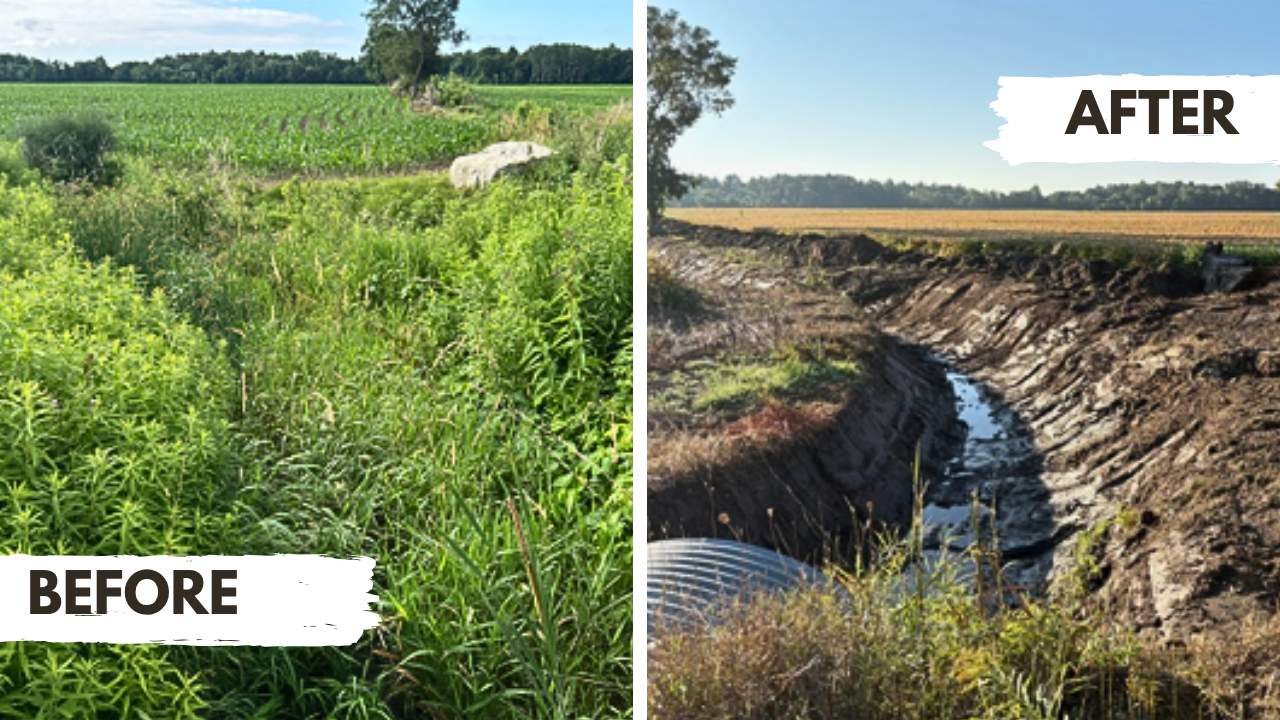
The Hamilton Lockhart Drain had become heavily filled with accumulated sediment and overgrown vegetation.
The buildup narrowed the channel, slowed water movement and reduced the drain's ability to handle rainfall.
What did we do?
Crews removed the accumulated sediment and vegetation and restored the channel to its intended width and design.
Why does it matter?
Restoring the channel gives water the space it needs to move efficiently through the drainage system.
This improves water flow during periods of heavy rainfall and helps reduce the risk of water backing up onto surrounding properties and roads.
See the difference?
Thank you for your contribution!
Help us reach out to more people in the community
Share this with family and friends